Warning: very long post that will really test your stamina!
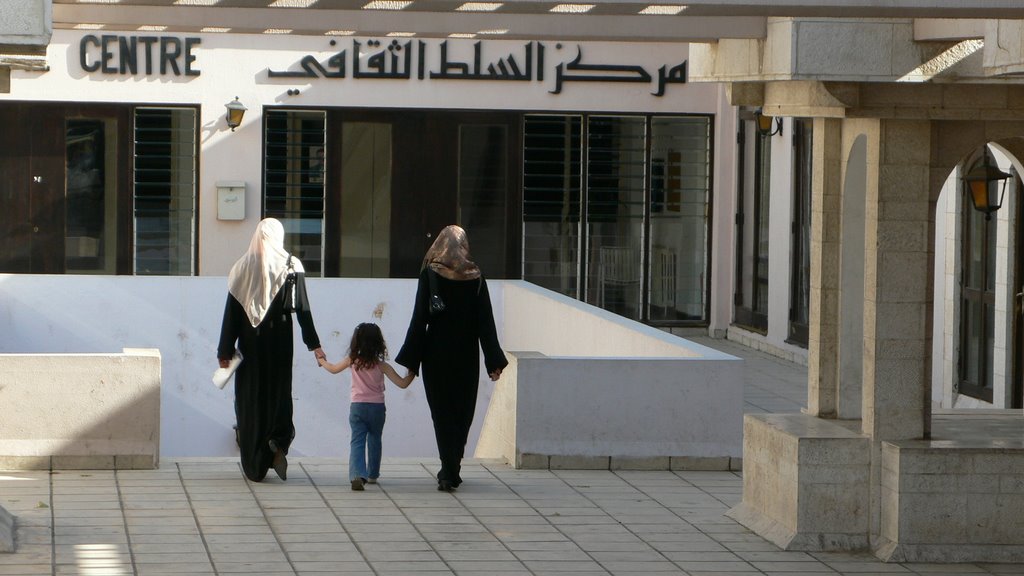 Photo by ES (Grumpy)
 reading yesterday the decision Morocco's King Mohamed VI to impose a ban on the use of the veil (hijab) for women, and to change some pictures on textbooks that portray costume because that would represent the generality of the Moroccan society, the first reaction was to see this done in a clear step towards the secularization of the state and then to a freer society.
In fact with the satisfaction with that decision, I felt a mixture of discomfort that came from the fact that, as liberal and libertarian conviction, the manner in which it was made such a step towards more freedom, ie through ' taxation by the state, not could not make me think.
In the West, where democracy is mature and where the concept of freedom of choice is quite common especially with regard to the choices on the religious (I say it often enough, recently, in Europe there is the pretense of wanting to get into rules of public life should do only what the private sphere), stride a little bit the idea that the path to a free society can pass through coercion by the state. To better understand why
instinctively and rightly endorse behavior in Morocco that we have considered illiberal, it is useful when a distancing from the categories under which our liberal culture leads us to think and try to understand as much as possible from the motivations King Mohamed VI to choose the path of other tax legislation (and therefore not a consequence of the habits and customs of society, but try to get them). In short we should consider just the tax only on the basis of the analysis of specific companies in which the tax is.
Despite being one of the most advanced Arab countries in the process of secularization of the state (not counting Turkey has concluded that thanks to Kemal Ataturk and instead comparing him to Jordan has been pursuing since the reign of King Hussein and now with his son, King Abdallah II ), as in all Arab countries, religion permeates every aspect of an individual's life. In fact, people are so rooted uses imposed by religion that they are never a personal choice, but an unconditional acceptance of something that seems obvious to tradition, because this is hardly the open exchange of diverse backgrounds. If we are women, the general acceptance of behavior induced by religious rules, also passes through the constraint imposed by the family and especially by men, against whom coercion, even in the case of consciousness, it is impossible to appeal to freedom choice.
It is in this context that the imposition of Mohamed VI to prohibit the use of the veil is part of evolution as a liberal and I would even say far-sighted.
is an evolution in the liberal sense because coercion by the state to ban the wearing of headscarves cultural coercion eliminates a lot more subtle and thus relegates religion to a private: in public life is done prohibition of wearing a garment that is clearly a religious symbol, in private of course anyone can do what he believes. It is possible that initially the application of the prohibition of producing a more obvious segregation of women, which will be constrained to move only within the home, but need, we can assume that she will come out slowly, and that fact will become generally accepted by the community to see her without a veil.
At the same time, as I said, this decision is far-sighted in my opinion because, as in the case of the reform of family law, Mohamed VI agreed that the step in the process of modernization of the Moroccan society must pass through the protection the role of women in Muslim society, increasing the freedom granted to her.
I personally believe is the right way, given the central role of women as property supporting the family, even in Muslim society (which is recognized by those Muslim men who claim always to have an absolute respect and total), although the total subjugation of women to men of family as a result of the application of religious rules: creating awareness, making the foundations for freedom of choice protected by the state for women, it is easier the way to freedom. An experience like that of microcredit for example, or small loans to individuals or groups of persons in order to initiate a trade to support themselves and their family, usually granted without collateral except those relating to pressione che possono fare sull’individuo dalla comunità cui appartiene a causa del ruolo ricoperto, può dare un’idea di quanto le società musulmane si reggano sul ruolo della donna: dove la cultura prevalente è musulmana affinché aumenti la probabilità di restituzione del credito, i crediti vengono concessi per la stragrande maggioranza a donne, perché capaci di pensare in modo non egoistico, a differenza degli uomini, al futuro per lei e per la propria famiglia, attraverso la pianificazione e quindi l’investimento produttivo anziché lo spreco.
Naturalmente la via intrapresa da re Mohamed VI in Marocco, non è la sola via possibile per diffondere la cultura liberale, come in alternativa la Giordania insegna: essendo in questo paese diffuso l’amore e la stima incondizionata per il re, derivante soprattutto dal suo comportamento morigerato e dal contatto continuo con la gente (amore e stima naturalmente conquistata grazie anche al precedente regno di re Hussein), il fatto che il re dia una impronta laica alla sua vita, nella quale la religione è importante, ma è un fatto privato, propone un esempio da emulare e porta quindi la gente a vivere sempre più la religione come fatto altrettanto privato. In Giordania infatti, ad esempio, al richiamo dei muezzin alla preghiera, non si vede la folla muovere verso la moschea, come invece avviene ancora in Marocco, ma singole persone. D’altra parte in Marocco vi è un maggiore contact with tourists and then with diversity, much to tolerate even very different from their own costumes (which of course but should not be followed), and perhaps the introduction of the law on the prohibition of the veil also derives from this even the slightest contamination.
The brief comparison between Jordan and Morocco proposal is not exhaustive and, indeed, there are certainly other key factors that have influenced the process of secularization, not least for Girdania example, close ties with Britain and the United States but the depth of what were the forces that determined the beginning and the continuation of the process to an open society of the two Arab countries that most the others are trying in every way to show that there is a moderate Islam, deserves a post in itself. Here you just want to point out that the roads taken to start the process of affirmation of individual liberties by the two countries are different and it would seem plausible interpretation according to which modernization in Jordan also takes place mainly through the costumes and customs and the example in given by the king and the law then adapts to modern costumes, Morocco (as was the case in Turkey) through legislation imposed by the king and the costumes are adapted accordingly.
What should like to emphasize is that in both cases it is good to put great trust and hope in pushing moderate and liberal Muslim society these two examples to try to give to their society. And the West should work to support this process.
Welcome then to all the roads leading in some way to freedom, including that which passes through an imposition!
PS: I emphasize that this post has absolutely no claim to exhaust the many facets of the liberalization process initiated by Morocco and Jordan wants to own, with extreme simplicity, share some comments made on this process.
Welcome then to all the roads leading in some way to freedom, including that which passes through an imposition!
PS: I emphasize that this post has absolutely no claim to exhaust the many facets of the liberalization process initiated by Morocco and Jordan wants to own, with extreme simplicity, share some comments made on this process.


0 comments:
Post a Comment